
That is John Gilmore, one of many biggest rebels of our time.
Within the early Nineties, Gilmore began a small dialogue group that met on the workplaces of his firm, Cygnus Options, within the San Francisco Bay Space. Formally, the subject was digital privateness. Informally, their mission was to defeat the federal government.
This clandestine gathering of minds, which additionally included the novel geniuses Eric Hughes and Timothy C. Might, noticed that the Web was going to vary the world, and that there have been two possible outcomes.
Within the first situation, the federal government would have the power to spy on anybody, anytime: a type of Orwellian dystopia the place residents would have zero privateness on the Web, and free speech would steadily be extinguished.
Within the second situation, citizen privateness can be protected, which might not solely permit free speech to thrive, but in addition permit safe monetary transactions over the Web, which might be good for enterprise and the financial system.
Two choices: dystopia or utopia. The important thing to all of it was public cryptography.
Cryptography had been round since 3,000 BC: the Spartans, Julius Ceasar, and the Nazis all used it to encrypt navy messages. However the watershed second got here in 1976, when this math paper gave the general public entry to military-grade encryption.
This was the know-how – public key cryptography – that Gilmore’s group was so enthusiastic about.
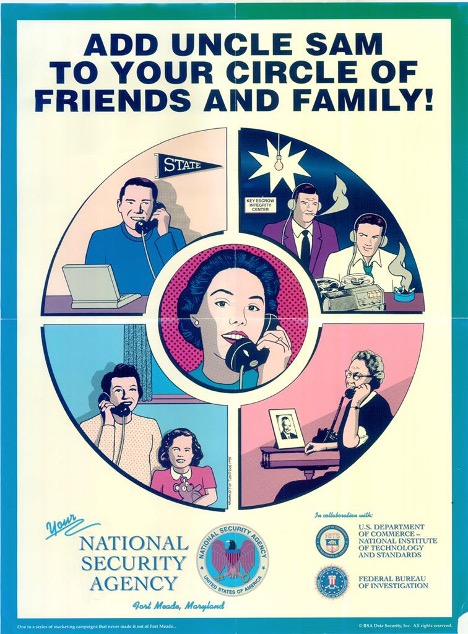
The U.S. authorities didn’t share their enthusiasm. A navy motion started within the halls of Congress to restrict the unfold of this encryption know-how. Which, it turned out, was a bit of bit like limiting the unfold of math.
The Cypherpunk Mailing Listing
“Privateness issues as a result of privateness is energy. We consider folks ought to have the best to determine for themselves what info they share and with whom.” – John Gilmore
Gilmore’s group had been radicals. They had been additionally good writers.
They weren’t simply discussing summary know-how, they had been speaking about methods to use it to guard civil liberties, to guard residents from authorities overreach.
At the moment, a few of their writings appear prophetic. “The know-how of the longer term would require an knowledgeable and vigilant inhabitants, capable of defend itself from a totalitarian state’s abuses,” wrote Eric Hughes. “Cryptography will play an important position in that course of.”
As Gilmore’s group started to develop in dimension and affect, they started to name themselves “cypherpunks,” a mashup of “cipher” and “cyberpunk.”
To higher coordinate their discussions, they began the Cypherpunks mailing record (bear in mind, these had been the times earlier than Reddit and X). The mailing record rapidly grew, as members mentioned every little thing from authorities monitoring to company management of knowledge.
As Wikipedia factors out, the general public wouldn’t perceive these points for many years. However at present, once you have a look at the large aggregation of our private knowledge by Meta, Google, and Apple — and the failure to guard that knowledge by corporations like Equifax and Capital One — you need to assume, possibly the Cypherpunks had been proper.
“Hierarchies are inherently insecure. Flat networks based mostly on cryptographic protocols are way more strong.” – Ian Grigg
The pondering of the Cypherpunks was eloquently summarized in A Cypherpunk’s Manifesto, written by Eric Hughes in 1993. “Privateness is just not secrecy,” he says. “A personal matter is one thing one doesn’t need the entire world to know, however a secret matter is one thing one doesn’t need anyone to know.”
In different phrases, all of us need privateness round our medical procedures, our monetary statements, and our deepest emotions. These are issues we selectively share with these we belief.
At the moment, we take this on-line privateness without any consideration: logging into your hospital’s affected person portal, doing all of your banking on-line, speaking with a therapist over Zoom. However it was all made doable by the cypherpunks.

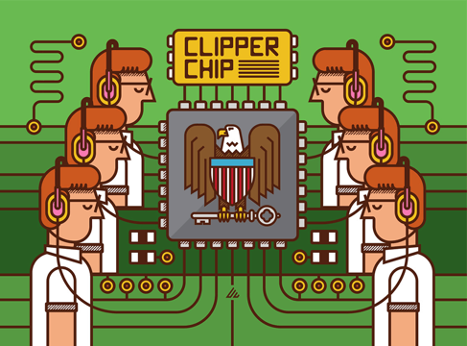
The Clipper Chip
The U.S. authorities had completely different plans.
In 1993, the Bush administration launched a brand new laptop chip, cheerily named the “Clipper Chip,” which feels like your finest buddy. In actuality, although, your buddy was a snitch.
The pc chip would permit robust encryption, with a catch: it could have a “again door” that could possibly be opened by the federal government, in case your gadget wanted to be searched.
Let’s say you had a brand new cell phone encrypted by the Clipper Chip: the federal government would have a cryptographic key (like a password) that might be held in a safe location, permitting them to pay attention in in the event that they wanted to faucet your cellphone, underneath court docket order.
For the Cypherpunks, this was a flashpoint. Who saved the key key? How might the key key stay secret? The key keys can be a honeypot for hackers. It was like having all of your passwords saved with one cloud-based firm (which, by the best way, is a really bad idea).
The Clipper chip was the rallying cry the Cypherpunks wanted to show their message right into a motion.

The Conflict on Digital Freedom
The Cypherpunks went on the offensive.
Gilmore, who unofficially turned often known as “Captain Cypherpunk,” used the mailing record to delegate duties like technical evaluation, authorized analysis, and media outreach amongst consultants. The Cypherpunks framed the federal government’s efforts as a battle on digital freedom.
On the identical time, Cypherpunk hackers wrote code to show the Clipper Chip’s weaknesses. They created a fictional firm known as “Sundevil Applied sciences,” so they might secretly order telephones with the brand new chip and seek out their vulnerabilities, then expose them extensively.
A few of their strategies had been ingenious. They raised $200,000 to construct a pc that would crack the federal government’s DES algorithm. Adam Again and others created a comic book guide known as “Uncle Fido’s Information to the Clipper Chip” to clarify in user-friendly language why it mattered.
One Cypherpunk, Phil Zimmerman, created an e mail encryption program, out there to anybody, that was the equal of a 4,096-digit padlock that might take a supercomputer billions of years to unlock. He known as it “Fairly Good Privateness.” (Learn my story on that one right here.)
Slowly, the Cypherpunks even received politicians to hitch forces. To stop one pro-Clipper invoice from passing, they organized the “Senator Sleepover,” a 24-hour protest outdoors Senator John Kerry’s workplace, the place they delivered pizzas, performed folks music, and bombarded him with faxes.
Exhausted and dealing with public stress, Kerry finally switched his vote, contributing to the Clipper chip’s final defeat.
Victory and Past
The Cypherpunk’s victory was hard-won, however historical past has proven the battle was price preventing.
The rise of safe on-line requirements like https had been made doable by their unwavering combat for privateness and safety. Each time you Venmo money, each time you Facetime a pal, within the deal with bar of your browser proper now, that safety is their legacy.
They had been proper about one other factor: privateness was additionally good for the financial system. The explosion of on-line companies, the rise of on-line procuring, the digitization of economic companies, had been solely doable by means of robust cryptographic requirements, made out there to everybody.
Privateness is not only good for people, it’s good for all of us.

Satoshi was a Cypherpunk
“Crypto is not only about cash. It’s about altering the world for the higher, giving folks extra freedom and management over their lives.” – Satoshi Nakamoto
Though he got here a lot later, there is no such thing as a doubt that Satoshi Nakamoto was a Cypherpunk. His unique bitcoin white paper is an element code, half manifesto. Certainly, there are bitcoin extremists who nonetheless maintain the novel views of a few of these early Cypherpunks, however at present it’s clear that we want one thing new.
Just like the early Nineties, the U.S. authorities is preventing arduous towards the specter of cryptography, this time with cryptocurrency. The SEC goes after crypto tasks each huge and small. The DOJ simply levied a $4 billion advantageous on Binance. Even those that wish to construct crypto “the best approach” are being stonewalled in authorities paperwork.
In a nutshell, the federal government needs to observe the move of cash.
Simply because it needed to observe communications with the Clipper Chip, the federal government want to know when cash is flowing into terrorist financing or different unlawful actions. Most of us would help that concept.
Nonetheless, we now have a brand new know-how – cryptocurrency – that after once more places cryptography within the arms of everybody. As Nick Szabo mentioned, “We are able to construct a world the place anybody, anyplace can take part within the international financial system, with out permission from governments or banks.”
No authorities ought to have the best to look at each cup of espresso we purchase, and each donation we make. Once more, privateness is just not secrecy. Even when we now have no secrets and techniques to cover, most of us would favor privateness more often than not. In any other case, we dwell in a surveillance state.
No authorities ought to be capable of freeze and even seize our crypto investments, based mostly on suspicion, with out due course of. In any other case, we dwell in a police state.
What’s extra, the federal government’s battle on crypto is choking off an unbelievable financial alternative. Simply because the rise of safe requirements allowed the Web to flourish, authorities oversight of excellent crypto innovation might propel the subsequent wave of American development.
That is greater than Republicans or Democrats. It’s all of us.
Why We Want Cryptopunks
At the moment, we should not have a unified voice representing the crypto trade. We don’t have the inventive zaniness of the Cypherpunks. All we now have is a few trade commerce teams in Washington, who all appear to be engaged on their very own agendas.
I hope that this may be the yr that we turn into the motion.
We use the phrases “monetary freedom” to imply “freedom from working,” however I’m speaking true monetary freedom, the power to make use of your individual cash, to make your individual investments, to retailer wealth within the ways in which you select.
It’s completely insane that we nonetheless should not have a greater understanding of whether or not crypto is authorized in the USA. Certain, you should buy and promote it (and so they’ll you should definitely tax it each time). However launch your individual crypto token, and you would find yourself in jail.
This yr, we have to get extra concerned. We have to help particular advocacy teams, to put in writing our legislators in help of pro-crypto insurance policies, and even create our personal native crypto communities. Activism is our solely approach out.
Most of all, we have to speak to folks. We have to share our ardour for crypto, to indicate that we’re not afraid to personal bitcoin, to coach our family and friends on what’s at stake. We’re now not outlined by what folks consider “crypto.”
That is the brand new Cypherpunk motion. Formally, we’re “Residents for Crypto Freedom.” However informally, we’re “Cryptopunks.”